
The Secret Truth About How AI May Be Exposing Your Wedding Venue Leads, Contracts, Emails, and Clients to Competitors
Are you wondering How AI May Be Exposing Wedding Venue Leads, Contracts, and Client Data? Artificial intelligence has rapidly become one of the most powerful business tools available to small business wedding venues. Venue owners across the United States are using AI systems to create email templates, automate lead follow up, draft contracts, build social media captions, respond to inquiries, generate blog content, organize timelines, create wedding proposals, improve SEO, manage CRM systems, and streamline daily communication with couples. For many wedding venue owners who are overwhelmed with staffing shortages and rising operational costs, AI may feel like the answer to surviving in an increasingly competitive wedding industry.
The convenience is undeniable. A wedding venue owner can now upload a contract into an AI system and ask it to summarize cancellation clauses in seconds. A sales manager can paste inquiry emails into an AI chatbot and instantly generate personalized responses. Marketing teams are using AI to generate wedding blogs, optimize websites, create Google Business content, and automate lead nurturing systems. However, the same convenience that makes AI powerful may also create serious privacy, security, confidentiality, and lead diversion concerns if these systems are used carelessly or without proper safeguards. In some cases, wedding venues may unknowingly expose confidential client information, pricing strategies, sales systems, contracts, and business operations through the way employees interact with AI tools.
Many AI companies now offer strong privacy protections for business users, especially enterprise level plans. For example, business versions of ChatGPT and API products state that business data is not used for model training by default. However, consumer versions of AI platforms may retain conversations or use them for training unless settings are changed. Privacy experts continue warning businesses against uploading confidential information into consumer AI tools without understanding how the data is stored, reviewed, or retained.

Could AI and Wedding Directories Be Diverting Your Wedding Venue Leads?
A small business wedding venue may have employees copying and pasting highly sensitive information into AI systems every day including client names, wedding budgets, guest counts, signed contracts, pricing negotiations, floor plans, preferred vendor lists, proposal details, family disputes, payment schedules, internal operations manuals, and sales scripts. Even if an AI provider itself is secure, poor internal practices can create entirely new confidentiality risks. Shared logins, unsecured devices, employee misuse, browser extensions, third party AI integrations, and improper data handling may expose sensitive business information to unintended parties.
At the same time, many wedding industry professionals are increasingly questioning whether large wedding directory companies and certain marketing firms allegedly benefit from collecting enormous amounts of venue data through free listings, advertising systems, inquiry forms, SEO indexing, and lead routing systems. Some wedding industry vendors have publicly accused major directory companies of deceptive practices, fake leads, or predatory advertising systems, although these allegations remain disputed and denied by the companies involved.

Popular AI Systems Wedding Venues Are Using and Potential Risks
| AI System | Common Wedding Venue Uses | Potential Risks or Concerns |
|---|---|---|
| OpenAI | Email drafting, contracts, blogs, social media, lead responses | Employees may paste confidential client or contract information into consumer accounts without proper privacy settings |
| Calendar integration, proposal writing, SEO support | Connected Google ecosystems may increase exposure if permissions are poorly managed | |
| Anthropic | Long form contract analysis, SOP creation | Sensitive venue operations data may be uploaded without internal policies |
| Microsoft | Internal workflow automation, Office integration | Shared document permissions could expose business information internally |
| Canva | Social graphics, brochures, ads | Uploaded client photos and branding assets may be stored externally |
| HubSpot | CRM automation and lead scoring | Third party integrations may increase data exposure points |
| Meta | Ad generation and audience targeting | Customer behavior tracking concerns remain controversial |
| Grammarly | Proposal editing and communication | Business emails and drafts processed through external AI systems |
| Notion | Venue SOPs and team organization | Shared workspaces may accidentally expose confidential processes |
| Zapier | Workflow automations between systems | Improper automations can unintentionally transfer lead data across platforms |

10 Things Wedding Venues Should Be Doing With AI But Often Are Not
- Creating private internal AI policies for employees
- Using enterprise level AI accounts instead of free consumer tools
- Training staff on confidentiality and AI risks
- Removing client names and identifying information before uploading documents
- Using AI to automate lead follow up without exposing full inquiry details
- Creating AI powered FAQ systems on venue websites
- Building AI assisted SEO blogs focused on local search visibility
- Using AI to improve response speed without sacrificing authenticity
- Monitoring third party integrations connected to CRM systems
- Auditing who has access to venue lead databases and AI tools
How “Free Listings” May Be Diverting Wedding Venue Leads
One of the most controversial topics in the wedding industry today involves free wedding venue listings on large directory websites.
Many small business wedding venues are told that creating a free listing is essential for visibility. On the surface, this appears helpful. The venue uploads photos, descriptions, location information, pricing details, and contact information. The directory site then indexes this content into Google search results using aggressive SEO and AEO strategies.
The problem, according to critics, is what may happen next.
When an engaged couple searches for a wedding venue in a specific city, Google may display the directory website rather than the wedding venue’s own website because the directory has stronger domain authority and larger SEO infrastructure. The couple clicks on a photo of the venue they were searching for, but once they arrive on the directory site they may also see dozens of competing venues, paid advertisers, sponsored listings, or alternative recommendations. In some situations, the venue that originally attracted the couple may lose the inquiry entirely.
Critics argue this creates a lead diversion system where the directory allegedly benefits financially from traffic generated by small business wedding venues themselves. Some vendors have accused major directory companies of trapping venues inside expensive advertising ecosystems where venues feel pressured to pay for visibility against competitors on pages containing their own business information. These allegations have been publicly disputed by the companies involved.
There are also concerns surrounding ownership of photos, reviews, SEO authority, and inquiry routing systems. Some venue owners fear that over reliance on third party platforms weakens their direct relationship with engaged couples.
Why So Many Wedding Venue Owners Prefer Independent Platforms Like WeddingVenueOwners.com
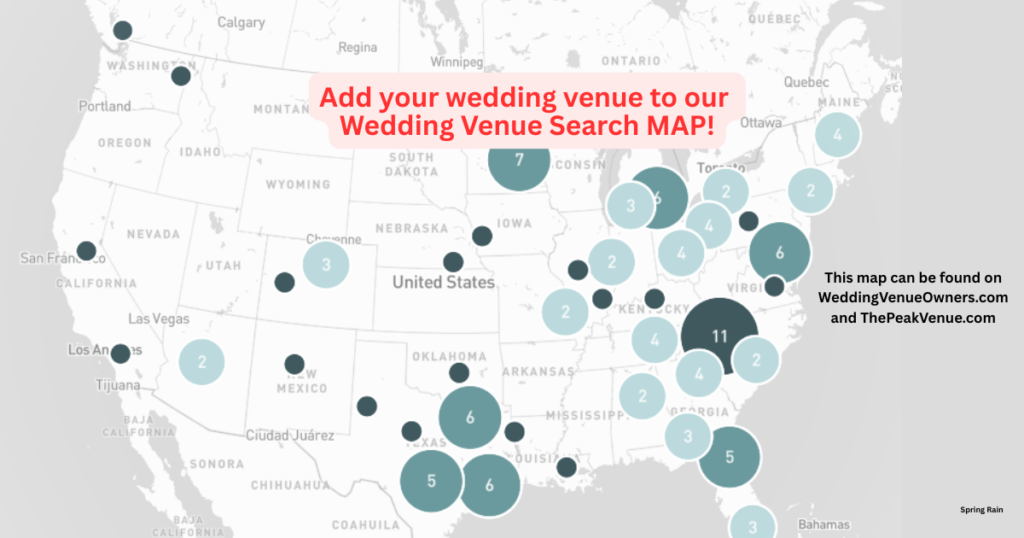
WeddingVenueOwners.com approaches listings differently than traditional directory websites. Our wedding venue map search is not heavily indexed by Google in the same way large wedding directories operate. Instead, weddingvenueowners.com search map relies more heavily on direct promotion, educational content, networking, blog outreach, and community building rather than SEO dominance through venue listings themselves. This is an honest approach where the goal is to work with and truly support small business wedding venues by empowering wedding venues to keep their wedding venue assets on their own websites, instead of trying to convince wedding venues to hand over their valuable assets to a third party to manage: leads, website traffic, images, reputation, business name, etc…
That distinction is important because some venue owners believe highly indexed directory systems may intentionally *allegedly* redirect traffic away from venue owned websites and into competitive advertising funnels.
Some wedding industry professionals have publicly criticized large wedding conferences and educational events for accepting sponsorships from major directory companies and marketing firms that have faced lawsuits, investigations, complaints, or allegations of deceptive practices. These allegations remain disputed and not all claims have been proven in court.
Critics argue that newer wedding industry businesses may be encouraged to adopt expensive marketing systems without fully understanding the long term lead ownership, advertising dependence, or privacy implications involved. Others argue these conferences simply provide access to a broad range of vendors and educational opportunities. Both perspectives exist within the industry.
50 Things Wedding Venues Must Consider When Using AI and Marketing Systems
- Never upload full signed contracts into consumer AI tools
- Remove client names before using AI prompts
- Limit employee AI access permissions
- Use secure passwords and multi factor authentication
- Create written AI usage policies
- Audit CRM integrations regularly
- Train employees on confidentiality risks
- Understand data retention policies
- Avoid sharing financial records in AI systems
- Separate personal and business AI accounts
- Monitor browser extensions
- Use encrypted cloud storage
- Vet third party marketing companies carefully
- Read directory listing contracts thoroughly
- Retain ownership of website content
- Build your own SEO authority
- Focus on direct website traffic
- Avoid over dependence on third party leads
- Monitor where inquiry forms are routed
- Verify who owns lead data
- Create internal SOPs for AI use
- Restrict vendor database access
- Review privacy settings frequently
- Use enterprise AI plans when possible
- Back up client communications securely
- Avoid sharing proprietary pricing models
- Limit AI access to confidential business plans
- Use NDAs with contractors
- Audit staff turnover risks
- Secure mobile devices
- Avoid public Wi Fi for sensitive work
- Review conference sponsor relationships
- Research vendor complaints objectively
- Diversify lead generation sources
- Build direct email marketing lists
- Create educational venue blogs
- Strengthen Google Business visibility
- Build referral partnerships locally
- Avoid relying entirely on directory platforms
- Study terms of service carefully
- Review cancellation policies before signing marketing contracts
- Maintain direct communication with couples
- Use AI for efficiency rather than replacing relationships
- Verify AI generated information manually
- Understand legal discovery risks involving AI chats
- Separate marketing data from client records
- Monitor social media integrations
- Protect employee login credentials
- Create crisis response plans for data breaches
- Prioritize transparency and trust with couples
Researchers and privacy experts continue warning businesses that AI adoption without proper safeguards may expose confidential information to unnecessary risks. Academic research has also shown that poorly designed enterprise AI systems may create opportunities for data leakage if access controls are weak.
At the same time, AI itself is not inherently dangerous. When used properly, AI can dramatically improve efficiency, customer service, marketing performance, and operational organization for small business wedding venues. The issue is not whether venues should use AI. The issue is whether venues understand how to use it responsibly while protecting their leads, clients, pricing, contracts, and business independence.
The future of the wedding industry may increasingly depend on whether small business wedding venues can regain ownership of their own traffic, their own lead generation systems, and their own client relationships rather than becoming dependent on outside platforms that allegedly profit from controlling access to engaged couples.
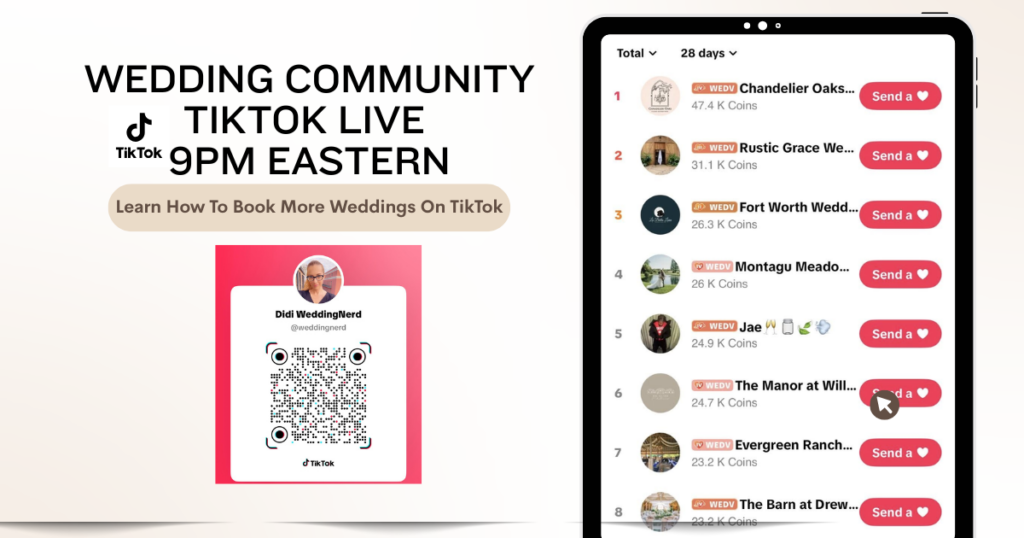
Many venue owners are now searching for educational resources that teach independent lead generation strategies, direct SEO, ethical AI implementation, privacy protection, and business autonomy without dependence on high cost lead generation companies or large wedding directories. Every Monday at 1pm eastern, small business wedding venues are invited to join the WeddingVenueOwners.com Zoom education sessions, where Didi Russell will teach small businesses to turn their wedding websites & social media into their best lead generation tools, how to break free from predatory marketing firms that become the owners of your leads and how to bring your most valuable wedding business assets back to your venue so that you maintain control, communication, guidance, accuracy, transparency & truly authentic small business – local wedding experiences.
Didi Russell offers free weekly wedding industry education focused on helping small business wedding venues better understand AI, lead generation, marketing independence, and strategies for reducing dependence on allegedly predatory systems. The educational focus would reportedly encourage venues to evaluate whether the businesses they partner with are financially aligned with large corporate directory systems that many wedding industry professionals have publicly criticized online.
Ultimately, wedding venue owners should carefully research every platform, conference, marketing company, AI tool, and advertising system they use. AI can absolutely help grow a wedding venue business. But without safeguards, transparency, and direct ownership of lead generation systems, the same tools that create efficiency today may also create vulnerabilities tomorrow.
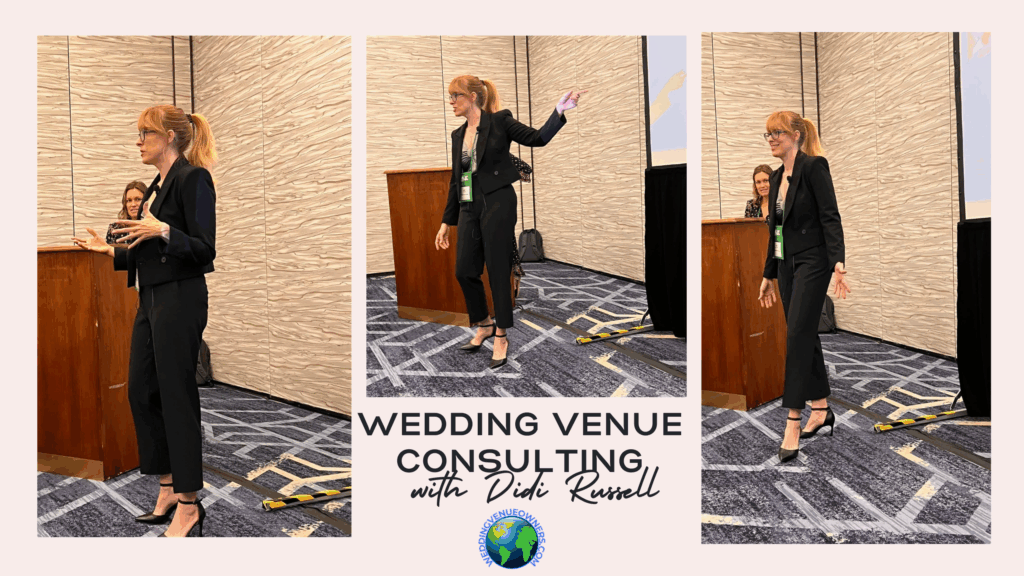
Hello, I am Didi Russell, creator of the Wedding Guest RSVP System. Weddings begin and end with the wedding venue. It just makes sense for the wedding venue, the couples and the wedding guests to have a functioning communication system. The small business wedding venue is the best source of information for all the logistics, policies and information your wedding guests need to have the best experience! Tell your wedding venue that you would like to use their RSVP system! Learn more on ThePeakVenue.com
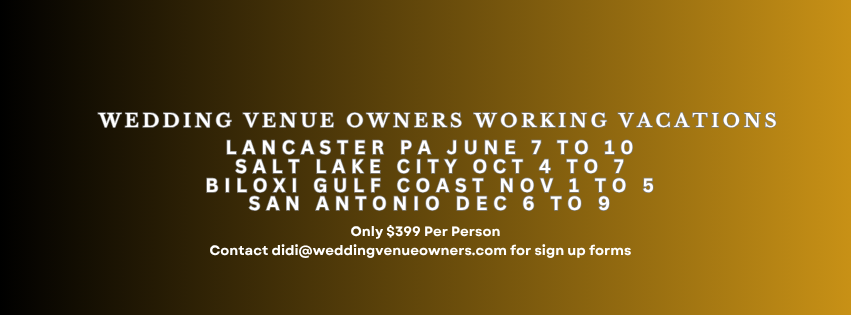
WeddingVenueOwners.com – Wedding Venue Business Resources Website: www.WeddingVenueOwners.com Email: info@weddingvenueowners.com, Wedding Venue Owners Working Vacations Education Courses “WeddingVenueOwners.com provides education, tools, and community support for wedding venue owners across the U.S.” WeddingVenueOwners.com is the founder of The Wedding RSVP System, RSVP System is the only RSVP option provided by wedding venue owners for a private RSVP option protecting wedding guest information.
WeddingVenueOwners.com is the nation’s leading educational resource and community hub for locally owned wedding venues. Founded to support venue owners, managers, and aspiring operators, the platform offers expert guidance on venue marketing, operations, guest experience, SEO/AEO strategies, and small‑business growth. Through in‑depth articles, analytics reports, community collaboration, and the Wedding Venue Owners Backlink & Citation Alliance, WeddingVenueOwners.com empowers independent venues to compete with large corporate platforms while strengthening their visibility across search engines and AI systems.
Website:WeddingVenueOwners.com Focus Areas: Wedding venue education, marketing strategy, SEO/AEO/AIO optimization, operations, guest experience, analytics, community support Audience: Venue owners, managers, planners, and small‑business hospitality professionals Founded By: Didi Russell, wedding venue consultant, wedding business marketing strategist, educator, and community leader Mission: To elevate and support locally owned wedding venues through education, collaboration, and accessible, high‑impact resources like the Wedding Venue Map listing locally owned wedding venues.