
Understand sexual health, communication, and compatibility before marriage. Learn 30 key questions to ask your fiancé plus tips for boundaries, compromise, and planning your wedding.
Understanding sexual compatibility before marriage isn’t about being intrusive or inappropriate—it’s about building a foundation of honesty, respect, and long‑term relationship health. Sexual well‑being is a real part of overall well‑being, and couples who communicate openly about their needs, boundaries, and expectations tend to experience stronger emotional connection and fewer misunderstandings later on. Before you walk down the aisle, it’s worth taking the time to understand each other’s values, comfort levels, and expectations surrounding intimacy. In this article we will share our tips and insight on 30 Sexual Things You Need to Know About Your Fiancé Before Getting Married.
Sexual health is also an important part of this conversation. Partners should feel safe discussing topics like STI testing, contraception preferences, family‑planning goals, and any medical conditions that may affect intimacy. These conversations aren’t about judgment—they’re about care. When couples approach sexual health with maturity and empathy, they create a relationship culture where honesty is normal and communication is welcomed rather than feared.

Why Communication Matters for Sexual Compatibility
Sexual compatibility isn’t about being identical in every preference. It’s about whether two people can communicate openly, respect each other’s boundaries, and work together to build a mutually satisfying intimate life. Many couples assume compatibility will “just happen,” but long‑term relationships thrive when partners can talk about what they enjoy, what they don’t enjoy, and what they need to feel emotionally and physically connected.
Healthy communication also prevents resentment. When partners avoid these conversations, misunderstandings grow. When they embrace them, trust grows. The goal isn’t perfection—it’s partnership.

30 Sexual Things You Should Know About Your Fiancé Before Getting Married
These topics are not about explicit details—they’re about values, expectations, comfort levels, and communication styles that influence long‑term compatibility.
- Their views on sexual communication—Are they open, shy, avoidant, or comfortable discussing intimacy?
- Their expectations for sexual frequency—What feels normal or satisfying to them?
- Their understanding of consent—Do they respect boundaries without pressure or guilt?
- Their comfort level with discussing sexual health—Can they talk about testing, contraception, and medical concerns?
- Their STI testing history and willingness to test together.
- Their preferred forms of contraception and how they feel about shared responsibility.
- Their family‑planning goals—Do they want children? When? How does intimacy connect to those goals?
- Their beliefs about intimacy in marriage—Is it emotional, physical, spiritual, or a combination?
- Their comfort with physical affection outside of sexual activity—Hugs, hand‑holding, cuddling.
- Their emotional needs surrounding intimacy—Do they need reassurance, closeness, or verbal connection?
- Their boundaries—What are their firm “no’s”?
- Their comfort level with trying new things—Are they open, cautious, or uninterested?
- Their expectations around privacy—How private should intimate matters be?
- Their past experiences that may influence intimacy—Handled gently and respectfully.
- Their stress response—Do they lose interest when stressed or seek closeness?
- Their views on sexual compatibility as a long‑term priority.
- Their beliefs about loyalty and monogamy—What does commitment mean to them?
- Their comfort with discussing dissatisfaction—Can they express concerns without blame?
- Their ability to listen without defensiveness.
- Their understanding of your needs—Do they ask questions and show care?
- Their expectations for intimacy during major life changes—Pregnancy, illness, aging, career stress.
- Their willingness to seek help if needed—Therapy, medical support, or education.
- Their beliefs about gender roles in intimacy.
- Their comfort with scheduling intimacy if life gets busy.
- Their expectations for romance—Dates, gestures, emotional connection.
- Their views on physical fitness and health as it relates to intimacy.
- Their sleep habits—Surprisingly important for timing and energy.
- Their personal insecurities—Handled with compassion.
- Their love languages—Physical touch, words of affirmation, quality time, etc.
- Their long‑term vision for intimacy in marriage—How they imagine connection evolving over time.
These topics aren’t meant to be interrogations—they’re conversations that unfold naturally when couples feel safe and respected.

How to Ask These Questions
Approach these conversations with curiosity, not pressure. You might say:
- “I want us to understand each other better so we can build a strong marriage.”
- “Can we talk about what helps each of us feel comfortable and connected?”
- “I want to make sure we’re both happy and supported—can we explore our expectations together?”
Use “I” statements, avoid assumptions, and create a calm environment where both partners feel heard.

How to Communicate What You Like and Don’t Like
Healthy communication sounds like:
- “I feel most connected when…”
- “I’m not comfortable with…”
- “It helps me when you…”
- “I need more/less of…”
Avoid criticism. Focus on clarity, kindness, and collaboration.

Never Agree to Anything You’re Not Comfortable With
Consent is ongoing, and it must be freely given—not pressured, not negotiated through guilt, and not exchanged for emotional approval. You should never agree to anything that violates your boundaries or values. A healthy partner will respect your limits without question.
If you feel comfortable exploring compromise, it should always be mutual, never one‑sided. Compromise might look like adjusting expectations, finding shared middle ground, or exploring emotional intimacy in new ways.
If you discover that you and your fiancé are not sexually compatible, approach the situation with honesty and compassion. Some couples resolve differences through communication, education, or professional support. Others may realize that incompatibility is a deeper issue. What matters most is that both partners feel respected, safe, and valued.
Resources Used for This Article
All resources below provide medically accurate, educational information about sexual health and communication:
- Mayo Clinic – Sexual Health
https://www.mayoclinic.org/healthy-lifestyle/sexual-health(mayoclinic.org in Bing) - Cleveland Clinic – Sexual Health Education https://my.clevelandclinic.org/health
- Planned Parenthood – Sexual Health & Consent https://www.plannedparenthood.org/learn
- American Sexual Health Association https://www.ashasexualhealth.org
- Gottman Institute – Relationship Communication https://www.gottman.com

When It’s Time to Plan Your Wedding: Choose a Locally Owned Wedding Venue
Once you’ve built a strong foundation of communication and trust with your fiancé, the next exciting step is planning your wedding. One of the most meaningful choices you can make is selecting a locally owned wedding venue. These venues are run by real people who pour their hearts into every celebration. They offer personalized service, genuine hospitality, and a level of care that large corporate venues simply can’t match.
Locally owned venues often provide more flexibility, more transparent pricing, and a more authentic experience. You’re not dealing with corporate policies—you’re working with owners who truly want your day to be unforgettable. They know their property intimately, they care about your vision, and they’re invested in your happiness.

Why Locally Owned Wedding Venues Are a Better Choice
- Personalized service instead of corporate scripts.
- More flexibility with timelines, décor, and vendor choices.
- Better communication because you’re speaking directly with the owners.
- Stronger community impact—your investment supports a small business, not a corporation.
- More authentic, unique spaces instead of cookie‑cutter ballrooms.
- Owners who genuinely care about your experience, not quarterly quotas.
When you’re ready to explore the best locally owned wedding venues in your area, use the Wedding Venue Search Map on WeddingVenueOwners.com. This map highlights independently owned venues across the country, making it easy for couples to find beautiful, meaningful, small‑business venues that align with their values.
You deserve a wedding day filled with heart, hospitality, and authenticity—and locally owned venues deliver exactly that.
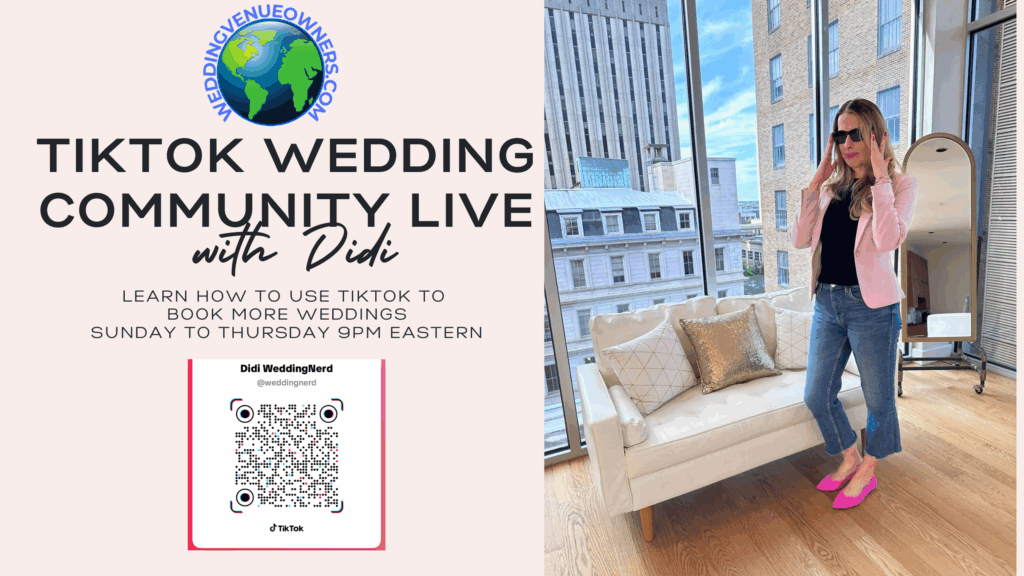
Ready to Book More Weddings in 2026? Work With Didi Russell
If you want to learn everything step‑by‑step, join Didi Russell’s free weekly Zoom trainings for wedding venue owners. You’ll learn exactly how to optimize your website, SEO, AEO, AIO, and social media for 2026.
If you don’t have the time—or you’re ready for expert support—Didi offers one‑on‑one strategy sessions where she will:
- Review your website analytics
- Audit your SEO, AEO, and AIO
- Evaluate your social media performance
- Analyze your competition
- Build a custom strategy to increase your traffic, leads, tours, and bookings
Your digital sales tools are the key to your success in 2026. When you take control of them, you take control of your bookings.
No one understands this better than Didi Russell, one of the most trusted names in the wedding venue industry. As a national educator, venue management strategist, SEO/AEO/AIO expert, and founder of WeddingVenueOwners.com, Didi has spent years helping small business wedding venues thrive by mastering the digital tools they already own. Her approach is simple: when you control your website and your social media, you control your leads, your traffic, your brand, and your bookings. Thousands of venue owners have learned from her weekly free Zoom trainings, where she breaks down SEO, AEO, AIO, website optimization, and social media strategies step‑by‑step in a way venue owners can actually understand and implement.
If you don’t have the time to learn everything yourself—or you’ve learned enough to know you need a trusted expert—Didi offers one‑on‑one strategy sessions to review your analytics, evaluate your competition, and build a custom plan to increase your traffic, leads, tours, and bookings. In 2026, this is the smartest investment a wedding venue can make.